
- Your cart is empty Browse Shop
During First 21 days before & 21 days after Calving – The Most Critical Phase
The 21 days before calving and 21 days after calving are known as the transition period. This is the most sensitive and decisive phase in the life of a cow or buffalo. Proper care during these 42 days decides animal health, peak milk yield, fertility, and overall profitability for the entire lactation.
Why the Transition Period Is So Important
During this phase:
- The animal faces maximum physical and metabolic stress
- Demand for energy, minerals, vitamins, and hormones increases sharply
- The body must balance calving, milk production, recovery, and immunity at the same time
If nutrition and management are not correct during this stage, the entire lactation performance gets affected.
Common Problems Due to Poor Transition Care
- Milk fever
- Retained placenta
- Low feed intake
- Ketosis and fatty liver
- Mastitis and weak immunity
- Delayed heat after calving
- Failure to reach full milk production potential
Part 1
21 Days Before Calving (Pre-Calving Phase)
Why This Phase Matters
In the last weeks before calving:- The foetus grows rapidly
- Udder and milk-secreting tissues develop
- The body prepares for the upcoming lactation
Improper feeding during this time makes the animal weak at calving, increasing the risk of metabolic disorders.
Key Risks in Pre-Calving
- Milk fever
- Difficult calving
- Weak uterus
- Retained placenta
- Loss of appetite after calving
Good pre-calving care lays the foundation for higher milk yield after calving.
Solution – Doctor Transition CloseUp
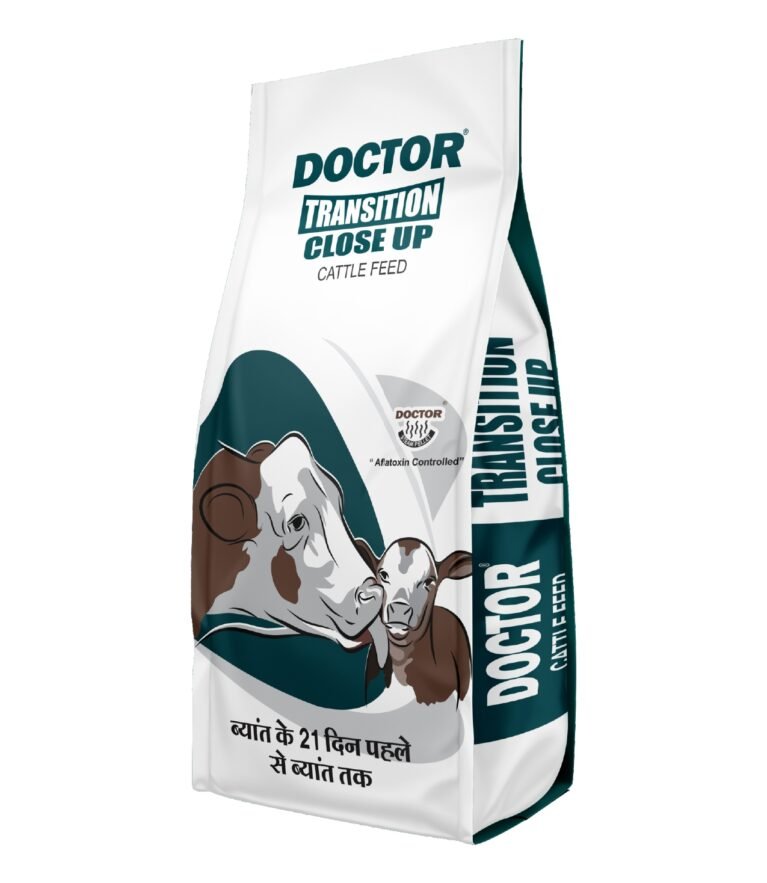
Pre-Calving Care Focus
- Maintain proper body condition (not too fat, not too thin)
- Strengthen digestion and mineral balance
- Prepare the body for smooth calving and milk production
Benefits of Doctor Transition CloseUp:
- Improved digestion
- Maintains proper Body Condition Score (BCS)
- Stronger immunity
- Proper udder development
- Easy expulsion of placenta
- Protection against milk fever and ketosis
This phase decides how much milk the animal will produce after calving.
Feeding Schedule
- From 21 days before calving till calving → 3-4 kg per animal per day
Do’s & Don’ts – Pre-Calving
DO’s – Must Follow
- Provide a balanced pre-calving ration with adequate minerals and vitamins
- Maintain proper body condition (neither too fat nor too thin)
- Feed good-quality green fodder and clean dry fodder
- Ensure clean drinking water is available at all times
- Keep the animal in a clean, dry, comfortable, and stress-free area
- Observe daily appetite, walking, and body condition
- Prepare a clean and hygienic calving area in advance
- Consult a veterinarian if swelling, weakness, or reduced appetite is noticed
DON’Ts – Avoid These Mistakes
- Do not feed excess concentrate or very high-energy feed
- Do not allow the animal to become over-fat or very weak
- Do not change feed or ration suddenly
- Do not feed mouldy, wet, or spoiled fodder
- Do not keep the animal in muddy, dirty, or overcrowded places
- Do not ignore signs like loss of appetite, lameness, or swelling
- Do not create stress due to transport, mixing, or rough handling
Part 2
21 Days After Calving (Fresh Cow Period)
Why is this period risky?
Immediately after calving:- Milk production rises rapidly
- Appetite does not increase at the same pace
- The body starts using stored energy
Without proper care, this leads to diseases and early milk drop.
Major risks during this phase:
- Loss of appetite
- Ketosis
- Fatty liver
- Mastitis
- Uterine infections
- Failure to reach peak milk yield
This helps the animal recover faster and reach peak milk production.
Solution – Doctor Transition Fresh
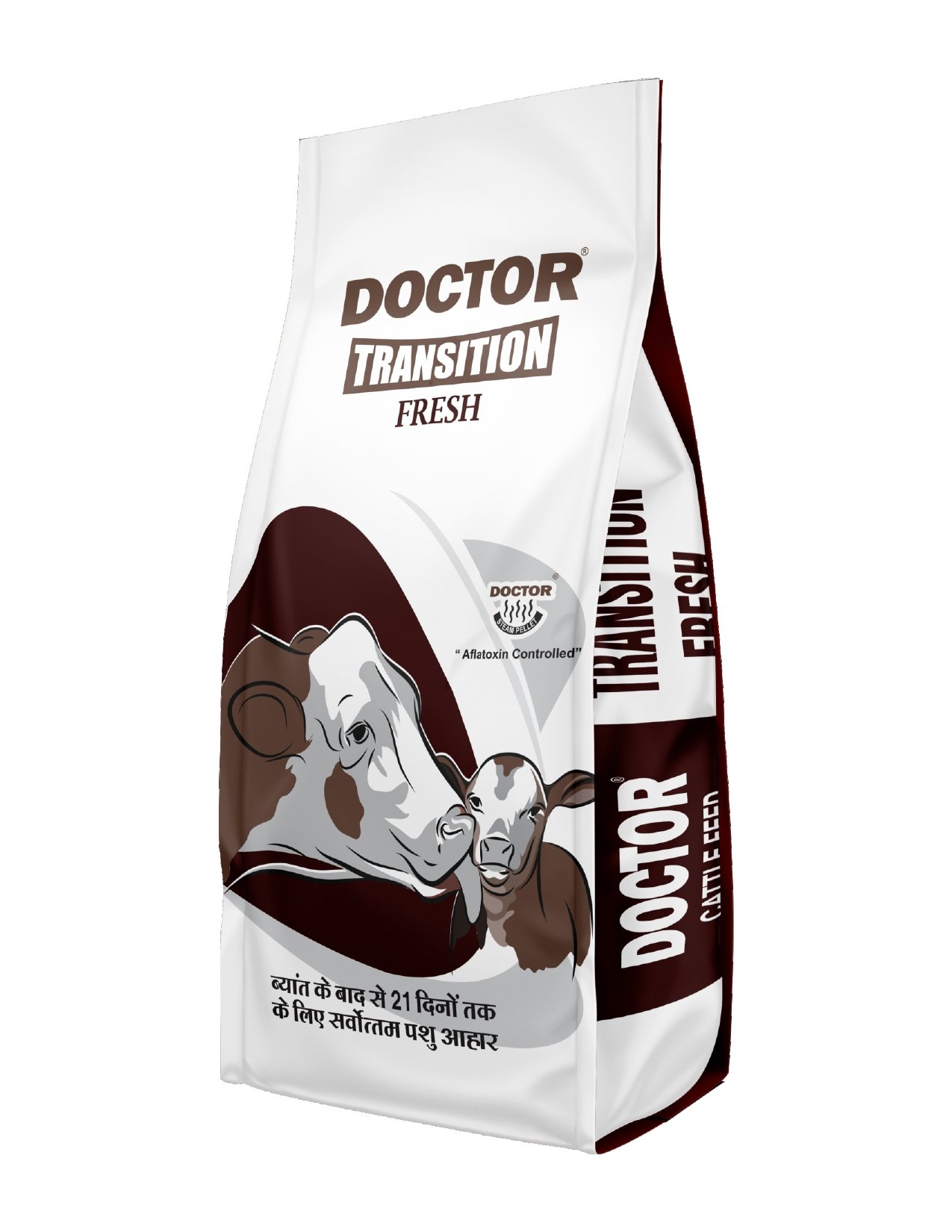
What does the animal need during this phase?
- High energy support
- Liver protection
- Easily digestible protein
- Minerals and electrolytes
- Udder and immunity support
This helps the animal recover faster and reach peak milk production.
Benefits of Doctor Care Fresh:
- Provides instant energy to milk glands and helps reach peak milk faster
- Improves feed intake (fodder and concentrate)
- Prevents ketosis and weakness
- Protects against negative energy balance
- Reduces risk of fatty liver and ketosis
- Protects against mastitis
- Strengthens immunity
Improves next conception
- Maintains hormonal balance
- Heat comes earlier and at the right time
Sustains milk production:
- Prevents early milk drop
- Ensures higher yield throughout lactation
Feeding Schedule
- After parturition to 21 days post parturition- 4 - 8 kg per day
Do’s & Don’ts – First 30 Days After Calving
DO’s
- Start Doctor Care Fresh immediately after calving
- Ensure clean drinking water at all times
- Provide green fodder, dry fodder, and balanced concentrate together
- Monitor milk yield, appetite, and dung daily
- Maintain udder and vaginal hygiene
- Keep the animal in a dry, clean, comfortable place
DON’Ts
- Do not keep animals only on straw or only on green fodder
- Do not ignore weakness, shivering, or reduced appetite
- Do not provide dirty water or mouldy feed
- Do not ignore mastitis or abnormal discharge
- Avoid overcrowded or stressful environments